Wednesday, 25 September 2013

papaya and pineapple


                                                             papaya is a wonder fruit, low in glycemic index, helpful for diabetics and those with arthritis and obesity. The fruit contains an enzyme called "papain" which helps break down foods and get digested so they do not turn toxic in stomach. So by ensuring that the intestinal tract remains healthy and cleansed.

             
painapple is another fruit which helps the digestion of tough proteins, particularly meats and paneer. Usually undigested protein is the main reason for gas, acidity and creation of toxins in the body. Pinapple has an active component called "bromelain".


Friday, 13 September 2013

Plantation, Selection and Storage of Basil Plant


Basil belongs to the family of Lamiaceae, of the genus: Ocimum. Its scientific name is "Ocimum basilicum."
Basil is originally native to Iran, India and other tropical regions of Asia. This bushy annual herbal plant is grown for its medicinally useful leaves and seeds. Basil grows best in warm, tropical climates. Fully-grown plant reaches on an average about 100 cm in height. The leaves are light green, silky about 2.5 inches long and 1 inch broad with opposite arrangement. The flowers are quite big, white and arranged in a terminal spike.

Health benefits of Basil herb                      
Basil leaves contain many notable plants derived chemical compounds that are known to have disease preventing and health promoting properties.

Basil herb contains many polyphenolic flavonoids like orientin and vicenin. These compounds were tested in-vitro laboratory for their possible anti-oxidant protection against radiation-induced lipid per-oxidation in mouse liver.

Basil leaves contain much health benefiting essential oils such as eugenol, citronellol, linalool, citral, limonene and terpineol. These compounds are known to have anti-inflammatory and anti-bacterial properties.

The herbs' parts are very low in calories and contain no cholesterol, but are very rich source of many essential nutrients, minerals, and vitamins that are required for optimum health.

Basil herb contains exceptionally high levels of beta-carotene, vitamin A, cryptoxanthin, lutein and zea-xanthin. These compounds help act as protective scavengers against oxygen-derived free radicals and reactive oxygen species (ROS) that play a role in aging and various disease processes.
Vitamin A is known to have antioxidant properties and is essential for vision. It is also required for maintaining healthy mucus membranes and skin. Consumption of natural foods rich in vitamin-A has been found to help the body protect from lung and oral cavity cancers.

Vitamin K in basil is essential for many coagulant factors in the blood and plays a vital role in the bone strengthening function by helping mineralization process in the bones.

Basil herb contains a good amount of minerals like potassium, manganese, copper, and magnesium. Potassium is an important component of cell and body fluids, which helps control heart rate and blood pressure. Manganese is used by the body as a co-factor for the antioxidant enzyme, superoxide dismutase.

Basil leaves are an excellent source of iron, contains 3.17 mg/100 g of fresh leaves (about 26% of RDA). Iron, being a component of hemoglobin inside the red blood cells, determines the oxygen-carrying capacity of the blood.

Plantation, Selection and Storage

No sprays can be used, not at all. The best thing is to simply daily water and keep her clean.
           
File:Ocimum tenuiflorum2.jpg

From 15 April to 15 June is the best season for growing this plant. The whole spot if possible may be covered by some net because the seedling stage creepers, being very delicate, are sometimes eaten up by the sparrows, so we have to give a little protection from attack of the sparrows. The watering should not be very much large in quantity, but it should be poured just to keep the ground soft and moist. Sunlight also should be allowed. When the creepers are grown at least 7 inches high, then you can take them out from the planting soil and transplant them in a row in a different place. Then go on watering and they will grow like anything.

Basil plant can be grown in a pot in the backyard so that fresh leaves are readily available for use whenever the need arises.

In the herb store, choose fresh organic basil over the dried form of the herb since fresh leaves are always superior in quality and flavor. Basil leaves should feature deep green leaves and free from dark spots or yellowing. Dry basil leaves and seeds can be found in these stores. However, sun dried as well as radiation-treated basil leaves may contain significantly decreased vitamin-C and carotene levels.

Fresh basil herb should be stored in the refrigerator set at appropriate humidity. Dried basil should be kept in a tightly sealed glass container in a cool, dark and dry place where it will keep fresh for up to six months.

Medicinal uses of basil herb

1. Fever & Common Cold: The leaves of basil are specific for many fevers. During the rainy season, when malaria and dengue fever are widely prevalent, tender leaves, boiled with tea, act as preventive against theses diseases. In case of acute fevers, a decoction of the leaves boiled with powdered cardamom in half a liter of water and mixed with sugar and milk brings down the temperature. The juice of tulsi leaves can be used to bring down fever. Extract of tulsi leaves in fresh water should be given every 2 to 3 hours. In between one can keep giving sips of cold water. In children, it is every effective in bringing down the temperature.

2. Coughs: Chewing tulsi leaves relieves cold and flu.

3. Sore Throat: Water boiled with basil leaves can be taken as drink in case of sore throat. This water can also be used as a gargle.

4. Stress: Basil leaves are regarded as an anti-stress agent. Recent studies have shown that the leaves afford significant protection against stress. Even healthy persons can chew 12 leaves of basil, twice a day, to prevent stress. It purifies blood and helps prevent several common elements.

5. Mouth Infections: The leaves are quit effective for the ulcer and infections in the mouth. A few leaves chewed will cure these conditions.

6. Headaches: Basil makes a good medicine for headache. A decoction of the leaves can be given for this disorder. Pounded leaves mixed with sandalwood paste can also be applied on the forehead for getting relief from heat, headache, and for providing coolness in general.

7. Eye Disorders: Basil juice is an effective remedy for sore eyes and night-blindness, which is generally caused by deficiency of vitamin A. Two drops of black basil juice are put into the eyes daily at bedtime.

Benefits of Basil Essential oil

Basil essential oil, is capable of improving memory and clarifying the mind.

Using this oil:                                                                                         
  • Improve blood circulation. 
  • Relieves pain.  
  • Treats respiratory diseases.
  • Improves digestion.
  • Reduces severity of cold or flu.                
  • Treats infections. 
  • Relieves stress. 
  • Improve skin and hair.   
How to Make Essential Oils from Herbs

Three Essential Tips for Success

The process of preserving herbs as aromatic oils is called infusion because the herbs are treated so that their herbal essences “infuse” the oil in which they are immersed.  For this reason essential oils are often called herbal infusions.

Pay careful attention to the three important tips below when you make your infused oils.  If you do then preserving your herbs in the way described will produce really high quality herbal infusions:

Use a good-quality, mild-flavored oil such as sunflower oil. You don’t want the taste of the oil to compete with the flavor and smell of your herbs. For this reason you should avoid using extra virgin olive oil
Cover you herbs completely with oil during the infusing process. Any bits sticking out will oxidize and spoil the flavor of the oil
Before storing the oil make sure you have removed all the plant material. If you don’t the oil will become cloudy and sour.
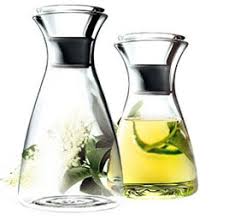
                                                 
Making the Aromatic Oil

When you are ready to start making essential oil from your herbs, follow these four steps carefully:

Put a handful of your herbs or flower heads into a clean glass jar. Choose either a single herb such as basil or a mixture such as oregano, rosemary and thyme. Crush them to release the flavor of the essential oils
Pour the mild vegetable oil (400 ml) into the jar until the leaves or flowers are completely covered. Put a well-fitting top on the jar and let it stand in a warm (but not sunny) place
After a week, strain off the herbs (use a cotton muslin cloth or an old open weave linen handkerchief) and then repeat the process of infusion with a fresh handful of your herbs (but using the same oil). Do this as many times as necessary until you have a jar of strongly flavored aromatic oil
Store your aromatic oil in a small to medium-size sterilized bottle and label it. Tie a small strip of cotton cloth around the top to help reduce the chances of air getting into the bottle. Make sure that you keep your stored oils out of the sun


To care for your tulsi shrub

Step
1
Refresh the planting soil around the tulsi shrub with nutrient-rich soil every spring. 

Step
2
Water the planting soil around the tulsi shrub regularly. Ideally you will need to water the soil every other day to keep it moist, while avoiding flooding the soil. When you feel the soil, it should feel damp or muddy to the touch, but you should not see a layer of water resting on it. Remember that tulsi really needs to be grown in a warm, humid environment.

Step
3
Trim or clean dead or dying leaves from the tulsi shrub as frequently as you notice them. The leaves can become brittle from not enough water or sun exposure, in which case you need to trim them away from the shrub with small gardening shears.

Step
4
Harvest your tulsi after it is fully grown (about 1 meter in height). 

Step
5
Protect your tulsi in the winter months. When the leaves have died back, you may want to cover your plant with a plastic bag to protect it from especially cold weather. Simply put it on top of your tulsi shrub and secure the bottom of the bag by bunching it together at the bottom of the shrub. This will not work for every shrub, unfortunately, especially if you live in cold climates. If you live in climates that get no snow, there is a good chance that your tulsi shrub will survive the cold, winter months, and then bloom again in the late spring.


Thanks and Take Care


(content : various sources)

Thursday, 12 September 2013

sleeping

Sleep is a normal activity in most higher organisms. Every human being, on average, spends a third of his or her life sleeping. Babies and children spend more time sleeping than adults while old people sleep less. The sleep wake cycle is controlled by an internal biological clock which usually coincides with the day - night cycle. We do not know yet what sleep does to our body except that we feel refreshed after a good night's sleep. But what lack of sleep does to an individual is quite well known. Prolonged lack of sleep leads to irritability, lack of concentration and even hallucinations. Thus, sleep certainly has a restorative function which helps the body face another active day.


Insomnia:

• Insomnia refers to the inability to go to sleep and sleeping difficulties

Symptoms to look for:

• Difficulty in falling asleep
• Inability to remain asleep
• Waking up early
• Lack of sleep leads to:
• Weak memory
• Lack of concentration
• Irritability
• Confused state of mind

Causes:

• Mental tension
• Anxiety
• Excessive work
• Feeling of resentment
• Anger and bitterness
• Constipation
• Overeating at night
• Dyspepsia
• Excessive consumption of tea or coffee
• Smoking
• Empty stomach before sleep

Natural home remedy using milk and honey:

1. Take 1 glass of milk
2. Add 1 tsp of honey
3. Drink every night before bedtime
4. This works as a tonic and a natural tranquilliser
5. Natural home remedy using aniseed and milk: 
6. Take ½ L of water
7. Add 1 tsp of aniseed
8. Heat the mixture for 15 min
9. Strain the mixture
10. Drink the liquid when it's hot

• You may add hot milk or honey to improve taste

• Consume at bedtime

Natural home remedy using honey: 

1. Take 1 glass of water
2. Mix 2 tsp of honey
3. Mix well
4. Drink before bedtime

Tips: 

• Take a hot bath or shower before bedtime for sound sleep


Snoring:

• Snoring is a common sleep related problem
• It is troublesome for the sufferer as well as the people around them

Causes:

• During sleep, muscles in the mouth relax
• At times, the tongue falls back
• This obstructs the passage of air which leads to snoring
• External factors which cause snoring are:
   o Physical exertion
   o Consuming alcohol
   o Certain medicines

Natural home remedy using clarified butter or brahmi oil: 

1. Put 2 drops lukewarm clarified butter in each nostril
2. Do this once every morning and every night at bedtime
3. Brahmi oil, a common ayurvedic herb, can be used instead of clarified butter

Natural home remedy using cardamom powder:

1. Take 1 glass warm water
2. Crush some cardamom seeds to get ½ tsp cardamom powder
3. Add it to the water
4. Mix well
5. Consume every day at bedtime

Natural home remedy using milk and turmeric powder:

1. Take 1 cup warm milk
2. Add 2 tsp turmeric powder
3. Consume every day at bedtime

Tips:

• Do not lie on your back as it increases the chances of your tongue falling back
• Elevate your head by 4-5 inches as it eases breathing and prevents tongue from rolling back. You may use cushions for this
• Lie sideways
• Avoid smoking since it leads to swelling and blockage of airways
• Avoid alcohol since it causes the muscles to relax

These remedies are based on the principles of Ayurveda, the ancient Indian science of healing, and are completely natural, non-invasive, and can be prepared at home. Consult your doctor if the symptoms persist.  Refer to the terms of use. 


Monday, 9 September 2013

fight for the cause


Sikhism is a spiritual, social, and political system of beliefs which considers spiritual life and secular life to be intertwined Guru Nanak, the 1st Sikh Guru established the system of the Langar, or free kitchen, designed to safehold equality between all people and express the ethics of sharing, community, inclusiveness and oneness of all humankind. In addition to sharing with others, Guru Nanak encouraged earning/making a living honestly without exploitation or fraud and also meditationon God's name or qualities. Guru Hargobind, the 6th Sikh Guru, established the political/temporal (Miri) and spiritual (Piri) realms to be mutually coexistent. According to the 9th Sikh Guru, Tegh Bahadhur, the ideal Sikh should have both Shakti (power that resides in the temporal), and Bhakti(spiritual meditative qualities). This was developed into the concept of the baptized Saint Soldier of theKhalsa by the 10th Sikh Guru, Gobind Singh.

Sikhs are expected to embody the qualities of a "Sant-Sipāhī"—a saint-soldier. Which means to love God, meditate on God, keep God in the heart, feel God's nearness and also be strong, courageous and ready to fight to protect weak people from cruel unjust attackers. One must have control over one's internal vices and be able to be constantly immersed in virtues clarified in the Guru Granth Sahib.
Guru Nanak described living an "active, creative, and practical life" of "truthfulness, fidelity, self-control and purity" as being higher than a purely contemplative life. According to Guru Nanak, the aim is to attain the "attendant balance of seperation-fusion, self-other, action-inaction, attachment-detachment, in the course of daily life", the polar opposite to a self-centered existence. In Sikhism there is no dogma, priestsmonastics or yogis.                                                            


     Punjabi: ਸੱਬ ਸਿੱਖਣ ਕੋ ਹੁਕਮ ਹੈ ਗੁਰੂ ਮਾਨਯੋ ਗ੍ਰੰਥ ।

Transliteration: Sabb sikkhaṇ kō hukam hai gurū mānyō granth.
English: All Sikhs are commanded to take the Granth as Guru.


Prohibitions in Sikhism

There are a number of religious prohibitions in Sikhism.
Prohibited are:
  1. Cutting hair: Cutting hair is strictly forbidden in Sikhism. Sikhs are required to keep unshorn hair.
  2. Intoxication: Consumption of alcohol, drugs, tobacco, and other intoxicants is not allowed. Intoxicants are strictly forbidden for a Sikh.However the Nihangs of Punjab take an infusion of cannabis to assist meditation.
  3. Blind spirituality: Superstitions and rituals should not be observed or followed, including pilgrimages, fasting and ritual purificationcircumcision; idols & grave worship; compulsory wearing of the veil for women; etc.
  4. Material obsession: Obsession with material wealth is not encouraged in Sikhism.
  5. Sacrifice of creatures: The practice of sati (widows throwing themselves on the funeral pyre of their husbands), ritual animal sacrifice to celebrate holy occasions, etc. are forbidden.
  6. Non-family-oriented living: A Sikh is encouraged not to live as a reclusebeggaryogimonastic (monk/nun) or celibate. Sikhs are to live as saint-soldiers.
  7. Worthless talk: Bragginglyingslander, "back-stabbing", etc. are not permitted. The Guru Granth Sahib tells the Sikh, "Your mouth has not stopped slandering and gossiping about others. Your service is useless and fruitless."
  8. Priestly class: Sikhism does not have priests; they were abolished by Guru Gobind Singh (the 10th Guru of Sikhism). The only position he left was a Granthi to look after the Guru Granth Sahib, any Sikh is free to become Granthi or read from the Guru Granth Sahib.
  9. Eating meat killed in a ritualistic manner (Kutha meat): Sikhs are strictly prohibited from eating meat from animals slaughtered in a religiously prescribed manner (such as dhabihah or shechita, known as Kutha meat, when the animal is killed by exsanguination via throat-cutting), or any meat where langar is served. The meat eaten by Sikhs is known as Jhatkameat.
  10. Having extramarital sexual relations.


Sunday, 8 September 2013

amazing facts...


  • There are 300,000 million capillaries in a human lung. If they are joined end to end, it will cover the distance between Delhi and Chennai.

  • For every 500 gm of fat gained, our body makes 11 km of blood vessels. It puts lot of strain on our heart, because it has to work harder to pump blood to these newly created extra vessels. Our body re-absorbs the unnecessary vessels, if it loses fat.                 

  • Skin is the largest organ of  human body and covers about 20 square feet in an adult person. It flakes away constantly and each person sheds around 18 kg in a lifetime.